Why Inquisitions Post Mortem Are a Goldmine for Family Historians
This weeks research has had me delving into the world of medieval land records – the Inquisition Post Mortem, usually abbreviated to IPM.
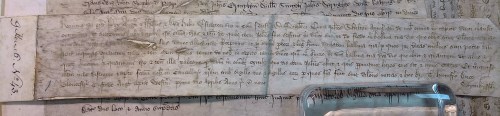
Despite the rather intimidating name, these records can provide an extraordinary amount of information about medieval landowners, their families, their property and even the wider communities in which they lived.
What is an Inquisition Post Mortem?
An Inquisition Post Mortem was an official enquiry held following the death of a tenant who held land directly from the Crown. The purpose wasn’t simply to record their death; the Crown wanted to establish exactly what land they held, how it was held, and—perhaps most importantly—who was legally entitled to inherit it.
Local jurors were called together to answer a series of questions. The resulting record often includes:
- the date of death
- details of lands and manors owned
- how those lands were held
- the annual value of the estate
- the identity of the heir
- the heir’s age (or whether they were still a minor)
From the Crown’s perspective this was all about revenue and feudal rights. For today’s researchers, it provides an invaluable snapshot of a family at a particular moment in time.
More Than a Simple Inheritance Record
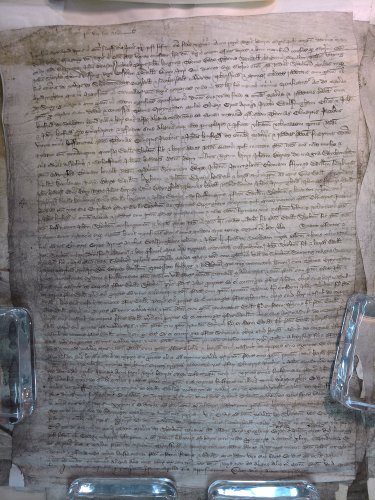
At first glance an IPM might appear to be little more than an inventory of property. In reality, they often reveal far more.
Because ownership of land was frequently complex, the enquiry sometimes had to explore previous transfers, settlements, family relationships and competing claims. This can lead to fascinating insights into several generations of a family.
For genealogists, an IPM may provide evidence of relationships that are simply not recorded elsewhere, particularly in the centuries before parish registers began.
For local historians, they can help reconstruct the history of individual houses, manors or estates, showing how land passed between families over time.
A Window into Medieval Society
One of the things I particularly enjoy about these records is that they rarely exist in isolation.
An IPM often forms just one piece of a much larger story involving charters, deeds, Chancery proceedings, Feet of Fines, manorial court rolls or other legal documents. By combining these sources, it becomes possible to reconstruct disputes over inheritance, uncover forgotten family connections and follow the ownership of land across centuries.
It’s a reminder that medieval records weren’t created for historians—they were practical legal documents dealing with real people and real problems.
They Can Be Challenging…
Like many medieval records, IPMs aren’t always straightforward.
Depending on their date, they may be written in Latin, Anglo-Norman French or Middle English. Handwriting styles vary enormously, abbreviations abound, and damaged documents can make interpretation even more difficult.
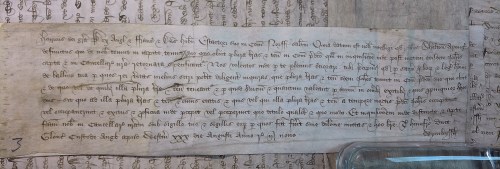
Reading them requires patience and, sometimes, a willingness to compare multiple related records before a complete picture begins to emerge.
Modern technology, including AI-assisted transcription tools, can certainly help speed up the process, but they are not a substitute for historical knowledge. Understanding the legal context, recognising standard formulae and questioning uncertain readings remain essential parts of the research process.
Why They Are Worth the Effort
The reward for tackling these records is often considerable.
Few other medieval sources combine genealogy, land ownership, legal history and local history so effectively. Whether you’re tracing an aristocratic pedigree, reconstructing the history of a farmhouse or trying to understand how an estate evolved over several centuries, an Inquisition Post Mortem can provide the crucial piece of evidence that links everything together.
They remind us that every piece of land has a history, every property has a chain of owners, and every legal enquiry tells the story of people whose lives shaped the landscape we see today.
So, the next time you’re researching a medieval family or an early property, don’t overlook the Inquisitions Post Mortem. They may look daunting at first, but they have the potential to unlock stories that have been waiting centuries to be rediscovered.

