How England’s Family Names Were Born
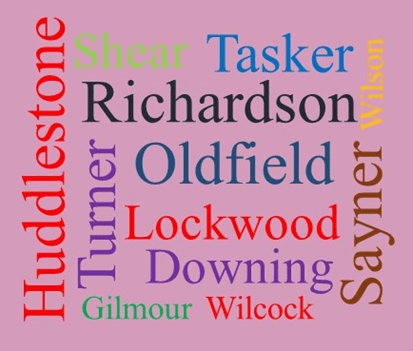
My research this week has had me thinking about surnames and their origins. Trimmer, Girling, Allard, are just some of the names I have come across this week. What are the stories behind theses surnames?
Every surname in England tells a story. Some reveal where ancestors lived, others describe their work, appearance, or even personality. Names like Smith, Richardson, Atwood, or Price are more than labels — they are surviving fragments of medieval history.
But hereditary surnames are surprisingly recent. Before the Norman Conquest of 1066, most people in England had only one personal name. As communities grew, extra descriptions — known as bynames — became necessary to tell people apart. A man might be known for instance as John the Baker, or William by the Bridge, or Richard’s Son, or Little Thomas.
At first these names were temporary and not passed to children. Over time, they became hereditary surnames.
The Norman Influence
The Norman Conquest transformed English naming traditions. Some Norman nobles already used hereditary surnames, often linked to estates in Normandy, while others adopted new names after arriving in England.
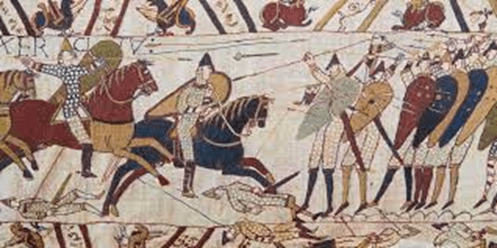
The Domesday Book of 1086 shows that many landowners still had no fixed surname at all. It would take centuries before hereditary surnames became common across all levels of society.
By the 13th century, wealthy families in London and major towns had mostly adopted hereditary surnames. Ordinary farmers and labourers followed more slowly, with most English families not using fixed surnames until the 15th century.
How English Surnames Developed
Patronymic and Matronymic Surnames: Names from Fathers and Mothers
Many surnames came from a father’s and to a lesser extent their mother’s personal name.
In northern England, names ending in “-son” became common such as Richardson, Williamson, and Dixon. In southern England, possessive “-s” endings were more popular such as Richards, Williams, and Roberts.
Wales developed its own tradition using Ap- (“son of”), which later evolved into names such as Ap Rhys to Price and Ab Owen to Bowen.
A mother’s name may be adopted when the mother was wealthy or influential, or the child was illegitimate, or to allow inheritance to pass through the maternal line. Examples include Emmot (from Emma) and Margisson (from Margery).
Place-Name Surnames
Some surnames identified where someone came from for example, Ashford, Thornton, or Bywater. Others described landscape features nearby: Hill, Wood, Brook, or Bridge. Names like Atwood originally meant “at the wood,” while Attbridge meant “at the bridge.”
Occupational Surnames
Occupations created many of England’s best-known surnames, such as Smith, Baker, Miller and Taylor. In medieval villages, a person’s trade was an easy way to identify them. Some occupational names are less obvious today. Webster, for example, originally meant a weaver.
Nickname Surnames
Some surnames began as descriptions of appearance or character, such as Little, Short, Black, White, or Proud. Others came from animals or nature: Lamb or Finch.
Not all medieval nicknames were flattering — many disappeared over time because families preferred more respectable names.
Why Surnames Changed So Much
Before spelling became standardised, names were written phonetically. The same family might appear in records under several spellings, such as Smith or Smyth or Smythe.
Families also changed names deliberately to sound more distinguished or to separate themselves from others with common surnames.
Some people even adopted entirely new surnames through inheritance. Florence Nightingale’s father, for example, changed his surname from Shore to Nightingale after inheriting family estates.
A Thousand Years in a Name
English surnames are linguistic time capsules. They preserve traces of Viking settlers, Norman nobles, medieval occupations, vanished villages, and regional dialects.
What seems like an ordinary family name today may actually carry centuries of history — all hidden in a single word.

