Taxing the Past: Using Lay Subsidies and Hearth Tax in Family History
This week I have spent some time working through taxation records as part of my research into the development of Cranleigh in the sixteenth and seventeenth centuries.
Tax records aren’t always the first place we think of when researching our ancestors, but they can provide some really useful chronological snapshots of a community.
Lay Subsidies
The Tudor and Stuart period produced a number of different forms of taxation, including Lay Subsidies and fifteenths and tenths. The information surviving varies considerably. Some records provide little more than a place and an amount, while others name individual taxpayers.
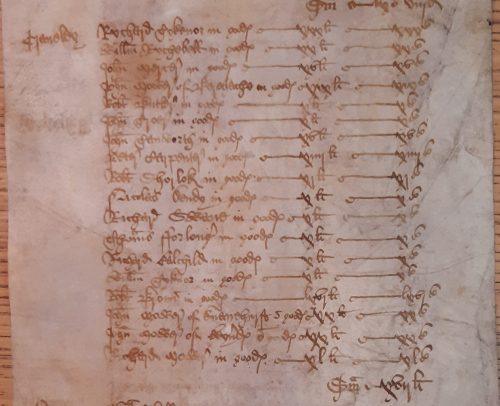
Where individuals are named, these records can provide another way of identifying people living in a particular place at a particular date and, in some cases, give an indication of relative taxable wealth.
But they need to be used carefully. They are tax assessments, not censuses, so someone who does not appear in an assessment was not necessarily absent from the village.
The Hearth Tax
The Hearth Tax provides a rather different type of evidence. The assessments record householders and the number of chargeable hearths in their homes.
For Cranleigh, assessments survive for 1662 and 1664. Although this gives us only two points in time, the lists contain a substantial number of names and provide a fascinating glimpse of the village in the 1660s.
The number of hearths can also give an indication of the relative scale of a dwelling, although it cannot tell us the size of the whole property or its associated land.
Putting the records together
The real value comes from combining these records with other sources.
I can now compare the names in the taxation records with people appearing in manorial records, deeds, wills and parish registers. Where the evidence allows, this can help connect individuals with particular properties and families.
And that is really what my research is about: moving beyond individual names in individual records and trying to reconstruct people, properties and communities over time.
A tax list may initially look like little more than a collection of names and numbers. But when those names can be connected to houses, land and families, it starts to tell us something much more interesting about the community in which they lived.

