Over the summer I tried to take a break from work to spend time with my family but have also taken the opportunity to work on person projects. That time has been rather dominated by old records, difficult handwriting, obscure finding aids and the occasional moment of wondering why I ever thought a particular research problem would be straightforward!
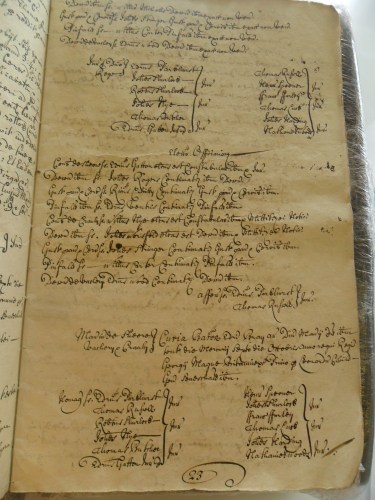
Much of my recent work has been connected with my Licentiateship research, but it has also fed directly into some of the talks and practical sessions I have been developing. One of the things I have been increasingly interested in is what happens when we stop looking only for the records we expect to find and start thinking about the records that might lead us somewhere else.
Going beyond the obvious sources
One of the recurring themes in my research has been the importance of understanding how historical records were created and organised.
For example, when researching disputes involving land and property, it is tempting to concentrate on deeds, wills, probate and perhaps census records. These are all enormously valuable, but they don’t necessarily tell us about the disputes, disagreements and negotiations that surrounded the property.
That has led me much further into the world of Chancery.
Chancery records can be an extraordinary resource for family historians because they can bring people to life in a way that more conventional genealogical sources often cannot. A case can reveal relationships, occupations, addresses, financial difficulties, business arrangements and disputes between family members. It can also explain why a particular transaction took place.
But finding those records is not always straightforward.
The detective work of finding a Chancery case
I have also spent some time writing and refining my catalogue of talk. One such talk I have been developing recently is: how to find Chancery records when you don’t necessarily know the case reference.
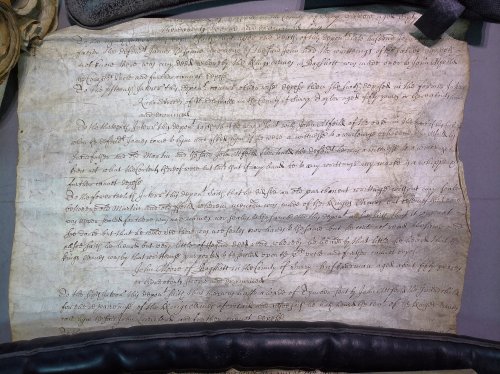
One of the examples I have been working with is a case involving Bowen and Smith which appeared in the Gazette in November 1809.
At first, searching The National Archives’ Discovery catalogue using the information provided in the Gazette entry produced nothing useful. It would have been very easy to conclude that the case could not be found—or perhaps did not survive.
Instead, the search turned to one of the less glamorous but extremely useful finding aids: the Bill Books.

Bill Books are essentially registers of bills filed in Chancery rather than the bills themselves. Their entries can provide enough information to identify a case even when the information in a newspaper or Gazette notice is incomplete.
This is a good example of something I have been finding repeatedly in archival research: sometimes the key to finding a record isn’t a better keyword search. It is understanding the structure of the archive and knowing which finding aid to use.
That, for me, is one of the most satisfying parts of this sort of research.
Records that make you look twice
I have also been working on my talk about land records and deeds, looking at how apparently dry legal documents can reveal much more than a simple transfer of property.
A deed might record a sale, mortgage, lease or settlement, but when you start putting individual transactions together, patterns begin to emerge.
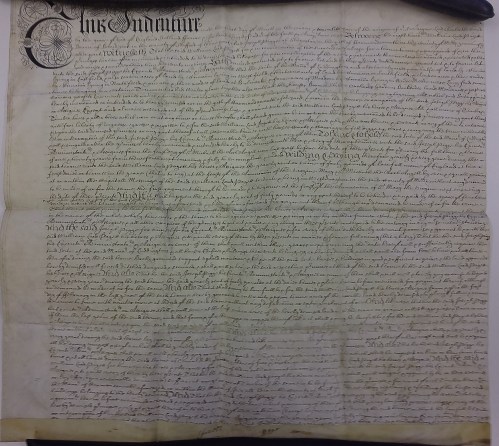
People buy and sell land. They mortgage it. They inherit it. They settle property on their children. They become trustees. They enter into partnerships. They fall out. They litigate.
And suddenly a collection of individual documents starts to look rather like a story.
I’ve been working through material at Surrey History Centre and incorporating information from the deeds into my research databases. This has been another reminder that databases are incredibly useful—but only if we remember that each row represents real people, real transactions and real events.
The database helps me see patterns. The documents provide the story behind them.
From research to teaching
I’m particularly interested in making my talks useful to people who might otherwise look at a catalogue such as Discovery and think, I wouldn’t even know where to start.
The aim isn’t simply to tell people that Chancery records exist. It is to demonstrate how you actually go about finding them.
That means talking about the different finding aids, explaining what information can and cannot be searched, showing how one source can lead to another, and—perhaps most importantly—being honest about the fact that archival research often involves following a trail that was not obvious at the beginning.
A Gazette notice might lead to a newspaper report.
The newspaper might provide a name or location.
That might lead to a Law Report.
The Law Report might provide a date or party.
That can then lead back into The National Archives’ records.
And sometimes, when one route fails, another finding aid provides the missing piece.
It is much more like detective work than simply entering a name into a search box.
Bringing the people back into the records
There is also a wider theme running through all of this which has become increasingly important to me: remembering the people behind the records.
It is very easy when working with large quantities of archival material to think in terms of names, dates, references and data.
But these were living people.
They bought houses. They borrowed money. They argued with relatives. They made business decisions. They inherited property. They went to court. They sometimes lost everything.
A Chancery bill or a deed isn’t simply another piece of evidence to add to a family tree. It is evidence of something that happened in someone’s life.
That perspective is something I have been trying to carry through into both my research and my talks.
And there is still plenty to do…
The slightly dangerous thing about archival research is that every answer seems to generate another question.
Finding one case leads to another person.
That person leads to another document.
The document raises another question about a property or transaction.
And before you know it, you have followed the trail considerably further than you originally intended!
That is certainly where I find myself at the moment.
I am continuing to develop my research into land, property and litigation, while at the same time working on my Licentiateship thesis and turning some of what I am discovering into practical sessions for other researchers.
The common thread through all of it is really quite simple:
Don’t stop when the obvious record doesn’t give you the answer.
Look at how the records were created. Look at the finding aids. Look for the records that sit behind the record you have already found. Follow the people, places and transactions rather than searching for a single perfect document.
Because sometimes the most interesting part of the story is hiding somewhere you weren’t originally looking.

