Discovering the Records Beyond the Internet
Online resources have transformed family history and local history research. We can now access census returns, parish registers, civil registration records, wills, newspapers and countless other sources without leaving home. But have you ever wondered what you might be missing?
For all the convenience of online research, only a fraction of the historical records that survive are available digitally. Some of the most interesting discoveries are still waiting to be found in archives, hidden away in bundles of deeds, court papers, account books and handwritten records that you may never encounter through an online search.
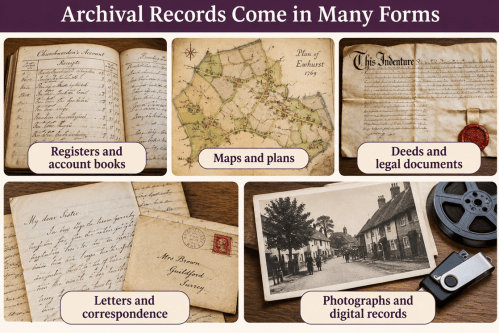
As a genealogist and local historian, I spend a considerable amount of time researching original records, and I am continually discovering just how much information they can reveal.
So, where do you start, and what might you find?
Where are historical records held?
There is no single repository holding all the records relating to a particular person, family or place. Depending on what you are researching, you may need to consult several different archives.
The National Archives at Kew holds an enormous collection of central government and court records, including material from the Home Office, Treasury and Foreign Office, as well as records from historic courts such as Chancery and King’s Bench.
Local authority archives, such as Surrey History Centre, hold a different range of material, including parish records, Quarter Sessions papers, manorial documents, deeds, maps, estate papers and private collections.
There are also specialist repositories, university archives, ecclesiastical collections, museums, local heritage centres and privately held family and estate archives.
It is worth remembering that historical administrative boundaries do not always correspond with modern ones. For example, when researching Surrey families, you may find that some parish registers and ecclesiastical court records are held at The London Archives or Hampshire Record Office rather than Surrey History Centre.
Finding the right repository is therefore an important part of the research process.
What can you find in an archive?
One of the most rewarding aspects of archival research is discovering records that you might never have thought to look for.
Parish records
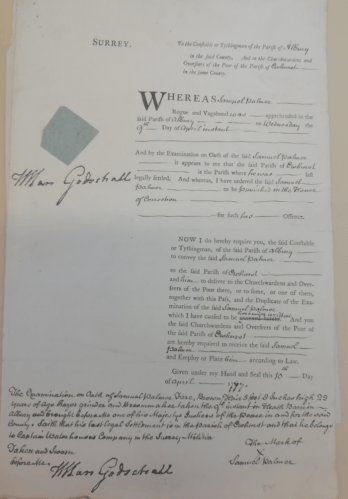
Parish records extend far beyond baptism, marriage and burial registers. Churchwardens’ accounts, vestry minutes, overseers of the poor records, rate books, settlement examinations and removal orders can provide fascinating insights into the lives of ordinary people.
These records can reveal occupations, financial circumstances, family relationships, movements between parishes and the way local communities cared for their inhabitants.
Court records
Quarter Sessions records are often associated with criminal proceedings, but they contain much more than details of crimes and punishments.
Petitions, licensing records, vagrant passes, poor law appeals, highway proceedings and other administrative papers can provide valuable evidence for family and local history.
One particularly interesting example I encountered was a petition by Mary Harrison, an orphan who had been apprenticed to a wire button maker in Southwark in 1795. Her petition described the appalling conditions in which she and other female apprentices were expected to work, including allegations of sixteen-hour working days and physical abuse.
The document provided details of her apprenticeship, the institution from which she came, her master and the circumstances that led her to seek her discharge. It is a remarkable example of how a single archival document can bring an individual’s experiences to life.
Manorial records
For anyone researching land, property or families before the nineteenth century, manorial records can be particularly valuable.
Court rolls, court books, rentals and surveys can help trace copyhold property through successive generations, identify tenants and establish family relationships.
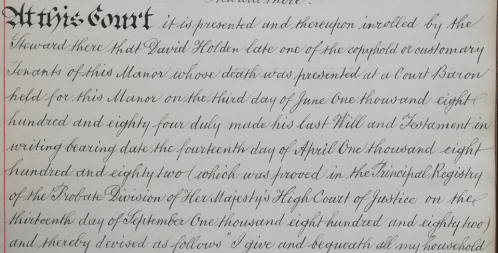
A manorial court entry from 1748, relating to a property in Cranleigh called Baymond, recorded how a widow, Mary Child, had devised the property to her ten-year-old son. It also identified his grandfather, Samuel Child, who was appointed guardian and admitted to manage the property until the boy came of age.
In one entry, we have several generations of a family, details of an inheritance, the name of a property and information about the legal arrangements made because the heir was a minor.
Deeds and property records
Deeds are another particularly rewarding source, especially for house historians and those researching families who owned or occupied property.
Leases, releases, bargains and sales, mortgages and abstracts of title can help establish a property’s ownership history and sometimes reveal relationships that are not recorded elsewhere.
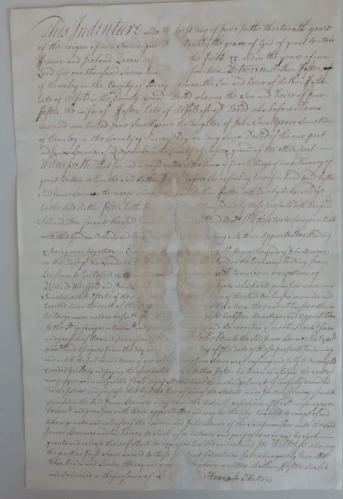
A lease and release dated 1714, relating to two properties in Cranleigh, identified Arthur Foster as the grandson of Jane Foster, formerly Smallpeece. This provided an important genealogical link between the Foster and Smallpeece families.
By combining the deed with parish registers, I was able to investigate the earlier generations and establish additional family relationships.
These are just a few examples. Archives also hold maps, plans, letters, photographs, business records, school records, tax assessments, estate papers and much more.
How do you find the records?
Once you have identified a likely archive, the next step is finding the relevant collection and individual documents.
There are several useful online resources to help:
- The National Archives Discovery catalogue – a useful starting point for identifying records held at Kew and discovering collections in other repositories.
- Individual archive catalogues – county record offices and other repositories often have their own searchable catalogues.
- Manorial Documents Register – particularly useful for identifying the location of surviving manorial records.
- Archives Hub – helps researchers discover collections held by universities and other specialist repositories.
However, don’t assume that everything held by an archive will appear in its online catalogue. Some collections have only been catalogued at collection level, while others may have older paper catalogues or finding aids that are not available online.
If you cannot find what you are looking for, it is always worth contacting the archive. Archivists can often suggest alternative collections or point you towards material you might otherwise overlook.
Preparing for your first archive visit
Visiting an archive for the first time can seem a little daunting, but it really needn’t be. Most archives are welcoming places, and staff are generally very happy to help.
A little preparation beforehand will make your visit much more productive.
Before travelling, check:
- Opening times and whether you need to book a reader’s seat.
- Whether you need to register or bring identification.
- How to order documents and whether they need to be requested in advance.
- Photography arrangements and whether a permit is required.
- What you are allowed to take into the searchroom.
- Facilities, parking and travel arrangements.
I would also recommend preparing a list of the document references you want to consult and having a clear idea of what you are trying to establish.
As for what to take, I would suggest a pencil, notebook, laptop and charger, identification, your list of document references and a camera or phone if photography is permitted.
Once there, familiarise yourself with the searchroom rules. Archives generally require careful handling of original documents, and you may be asked to use book supports, weights or other equipment. Follow the instructions provided by staff, and don’t be afraid to ask if you are unsure.
Making the most of your discoveries
Finding an interesting document is only the beginning. It is important to record exactly where it came from and consider what it can actually tell you.
Always make a note of the full archival reference, take accurate notes and photograph documents where permitted. Consider why the document was created, who created it and what purpose it served.
Most importantly, don’t rely on one document in isolation. Compare the information with other records and look for supporting evidence.
A deed might identify a family relationship, but parish registers, wills or manorial court entries may help establish the wider family connections. A settlement examination might provide details of someone’s birthplace and movements, which can then be investigated through parish records and other sources.
It is also important to distinguish between what a document actually states and what we interpret from it. Original records can be difficult to read, incomplete or occasionally contradictory, so careful evaluation is essential.
Don’t overlook what is waiting in the archives
Digital resources have made historical research more accessible than ever, but they should be a starting point rather than the limit of our investigations.
Some of the most interesting discoveries I have made have come from records that I would never have found through a straightforward online search. A Quarter Sessions petition, a manorial court entry or a seventeenth-century property deed can reveal information about individuals and communities that might otherwise remain hidden.
Whether you are researching your family history, investigating the history of a house or exploring the development of a local community, archives offer an extraordinary wealth of material.
So, next time you reach a brick wall in your research, or simply want to take your investigations further, consider visiting an archive.
You never quite know what you might discover when you open an archive box!

