Wills are one of the richest sources of information available to family historians, particularly when it comes to piecing together relationships across generations. In one family I have been researching, a series of wills allowed me to trace and corroborate connections spanning three generations in Hampshire, from the mid-17th to the mid-18th century. Without these documents, many of those links would have remained uncertain.
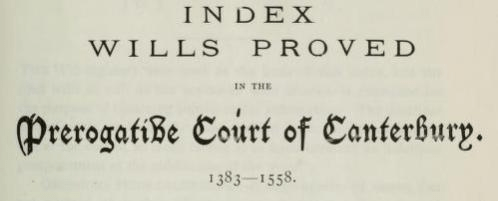
In England and Wales, wills were proved in ecclesiastical courts prior to 1858. The most well-known of these is the Prerogative Court of Canterbury (PCC), which generally dealt with the estates of wealthier individuals, those with property in more than one diocese, or those with connections to London.
However, the majority of people had their wills proved in local church courts, meaning that both PCC and local probate records should always be considered when researching a family.
What makes wills so valuable is the level of detail they can contain. They often name spouses, children, sons-in-law, daughters under their married names, grandchildren, and sometimes even more distant relatives or close associates. Occupations, residences, and personal relationships may also be hinted at through the wording of bequests. One particularly interesting example I encountered—a PCC will dated 1787—left an annuity of five guineas a year to the testator’s housekeeper for the remainder of her life, his wife having predeceased him. Details like this not only confirm family circumstances but also offer a glimpse into the household and social structure, bringing individuals to life in a way few other records can.
Wills can also help trace earlier generations by referencing inherited or purchased land. When property appears consistently across multiple wills, it can act as a reliable thread linking generations. In the Hampshire family I mentioned, several parcels of land were recorded, but one property in Holybourne appeared repeatedly. It was typically passed to the eldest son, while other properties or sums of money were distributed among younger children. This pattern of inheritance made it possible to track the family’s lineage with greater confidence and to distinguish between individuals of the same name.
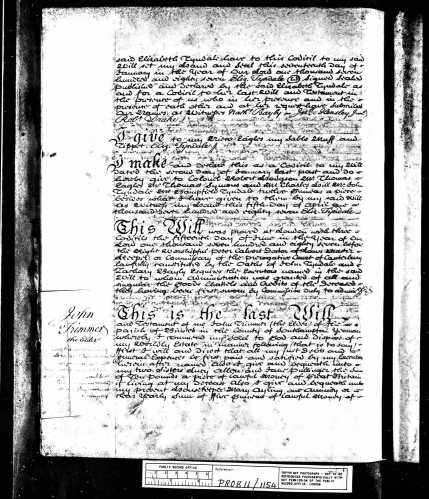
Beyond immediate family, wills often reveal wider social and familial networks. Executors, witnesses, and beneficiaries can include neighbours, business associates, or more distant relatives. In some cases, these individuals provide crucial clues, particularly where parish registers are incomplete or ambiguous. Following these connections can help build a broader picture of the community in which a family lived and may open up entirely new lines of enquiry.
It is also important to understand something of the probate process itself. A will only becomes truly useful once it has been proved, meaning that the court has recognised it as valid and authorised the executors to administer the estate. If no will was left, an administration (or “admon”) may survive instead, often naming the next of kin. While typically less detailed, these documents can still provide valuable evidence of relationships.
Of course, not every will is equally informative. Some are brief and formulaic, offering little more than a confirmation of a single heir or a general statement about property. Others may omit key relationships or use ambiguous terms. In the case of the youngest member of the direct line I was researching, his will referred only briefly to land inherited from his father, providing limited detail. However, by examining the wills of his siblings—particularly his older brother—alongside parish registers and land tax records, it was possible to build a much fuller picture and extend the family line further back.
For this reason, it is rarely sufficient to rely on a single document. A more effective approach is to examine the wills of multiple family members and to combine them with other sources such as parish registers, land records, and tax lists. This broader, “cluster” approach to research allows patterns and connections to emerge that might otherwise be missed.
Today, many wills are accessible online. The The National Archives holds PCC wills, many of which are digitised and searchable, while local probate records are often available through county record offices or subscription websites such as Ancestry and Findmypast. However, coverage varies, and some records still require in-person research.
In summary, wills are invaluable “anchor” records in genealogical research. While they are not always complete or straightforward, when used alongside other sources they can provide compelling evidence of family relationships, property inheritance, and social context. Careful analysis and comparison across multiple documents can turn even fragmentary references into a coherent and well-supported family history.

