Craft, Community, and the River Loddon in the Early 17th Century
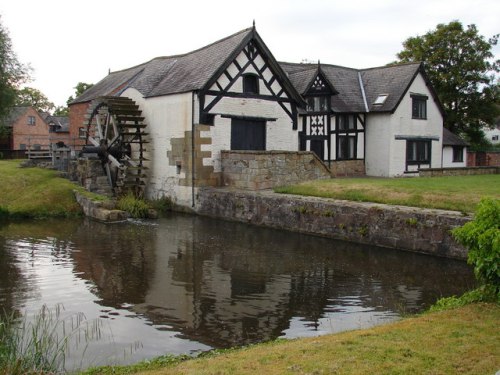
One of my main research projects this week was trying to research a Miller in Berkshire in the early 17th century.
Millers occupied a quietly essential role in pre-industrial society. While often overlooked in grand historical narratives, their work sat at the intersection of agriculture, local economies, and daily sustenance. In early 17th-century England, including along the River Loddon in Berkshire and Hampshire, millers were both indispensable tradesmen and figures of complex social standing.
The Miller’s Trade
At its core, milling was about transformation—turning grain into flour. Yet the process required far more than brute force. Millers needed a working knowledge of hydrodynamics, mechanical systems, and grain quality. Watermills, the dominant technology along rivers like the Loddon, relied on carefully managed flows to power large wheels connected to millstones. These stones had to be precisely dressed—cut with grooves—to grind grain efficiently without burning it.
The early 1600s were a period of incremental technological refinement rather than revolution. Millers maintained wooden gears, monitored water levels, and ensured consistent output in a system vulnerable to seasonal fluctuations. Droughts could halt production; floods could destroy infrastructure overnight.
The River Loddon: A Working Landscape
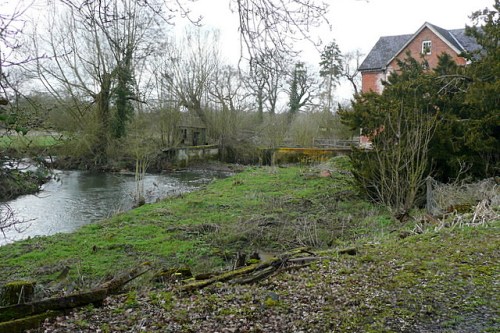
The River Loddon, a tributary of the Thames, flowed through fertile agricultural land dotted with small settlements. By the early 17th century, it supported a network of watermills that served nearby farms and villages. These mills were typically positioned at strategic points where the river’s gradient and flow could be controlled through weirs and millponds.
Pictured: River Loddon at Stanford End Mill
Unlike large urban mills, Loddon mills were often modest in scale, embedded within rural communities. They acted as local processing hubs where farmers brought wheat, barley, or rye. The surrounding landscape was shaped by their presence—channels were cut, banks reinforced, and rights to water usage carefully negotiated.
Social Standing and Reputation
Millers held an ambiguous place in society. On one hand, they were vital: without them, grain could not be made into bread, the staple food of the population. On the other, they were frequently viewed with suspicion.
This mistrust stemmed from the customary system of payment. Millers typically took a portion of the grain—known as the “miller’s toll”—as compensation. Because this system relied on trust and measurement, accusations of dishonesty were common. Literary sources from the period often depict millers as crafty or opportunistic, though such portrayals likely exaggerate for effect.
Along the River Loddon, where communities were small and interactions frequent, a miller’s reputation mattered greatly. A fair and reliable miller could become a respected local figure; a dishonest one risked social isolation or formal complaints.
Economic Importance
In the early 17th century, England’s economy was still overwhelmingly agrarian. Grain production was central, and milling was a necessary step before consumption or sale. Mills along the Loddon contributed to a localized but interconnected economy, linking farmers, bakers, and markets.
Some mills were owned by local landowners or manorial lords, with millers operating as tenants. Others were independently run. In either case, the mill represented both a source of income and a point of control. In certain areas, farmers were legally required to use a specific mill—a system known as “soke”—ensuring a steady flow of business.
Daily Life on the Loddon
For a miller working along the River Loddon around 1620, daily life was shaped by the rhythms of both nature and community. Days began early, often before sunrise, to take advantage of available water flow. Grain deliveries arrived throughout the day, and the miller had to balance multiple tasks: operating the machinery, recording transactions, maintaining equipment, and managing customers.
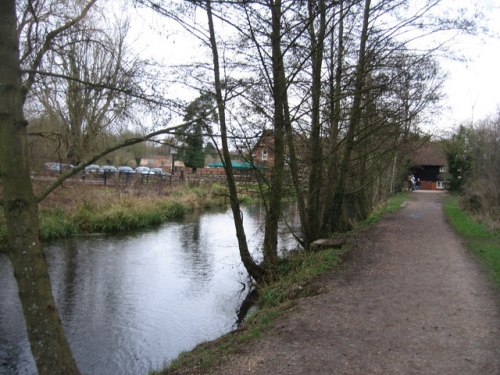
Pictured: Approaching Bartons Mill along the River Loddon
The mill itself was a noisy, dusty environment. The constant turning of the wheel, the grinding of stones, and the movement of grain created a distinctive atmosphere. Yet it was also a social space. Farmers exchanged news while waiting for their grain to be processed, making the mill a focal point for local interaction.
Challenges and Change
The early 17th century was not without its pressures. Population growth increased demand for food, placing strain on agricultural systems. Periodic poor harvests could lead to shortages and heightened tensions, with millers sometimes caught in the middle.
Additionally, broader economic shifts—such as the gradual move toward market-oriented agriculture—began to alter traditional relationships. While the fundamental technology of milling remained stable, the context in which millers operated was slowly evolving.
Conclusion
Millers in the early 1600s, particularly those along the River Loddon, were more than simple tradesmen. They were technicians, intermediaries, and community figures whose work underpinned everyday life. Their mills shaped the landscape, their practices influenced local economies, and their reputations reflected the delicate balance of trust within small rural societies.
Understanding their role offers a window into a world where even the most routine processes—like grinding grain—were embedded in a complex web of relationships, skills, and environmental constraints.

