This week took me into parich chest records to try and identify the ancestors in a project i am working. These can be some of the most valuable records when researching ancestors in the early modern period, but aren’t the most obvious ones. Tucked away in parish chests are documents that reveal not just names and dates—but movements, relationships, and personal circumstances.
Settlement
Following the Act of Settlement and Removal (1662), each parish became responsible for its own poor. This meant that every individual had a legal “settlement”—the parish where they could claim relief if needed.
Settlement certificates, introduced in 1697, allowed people to move for work while retaining ties to their home parish. For family historians, these are particularly valuable as they often list whole family groups, ages, and parish connections.
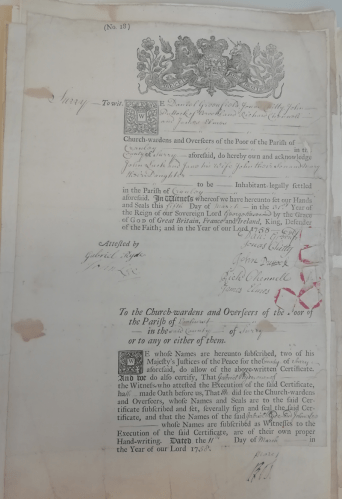
Settlement certificate from 1758 (Surrey History Centre P38/3/225) provides details of the famil of John Luck, including Jane his wife, John their son and Mary their daughter. The certificate confirms they had settlement in Cranley (Cranleigh) and could therefore be returned there if they became a burden on the parish they were moving and required assistance from the poor rate.
When examining a settlement certificate, look for:
- Names of all family members
- Ages (if recorded)
- Parish of origin and receiving parish
- Signatures of churchwardens and overseers
Copies may survive in both parishes—so always check neighbouring locations.
Removal and Settlement Examinations
Settlement examinations are among the most detailed records you’ll encounter. Taken under oath, they often read like short biographies, recording a person’s life history in surprising detail.
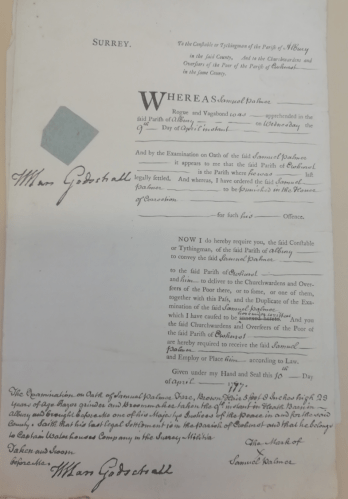
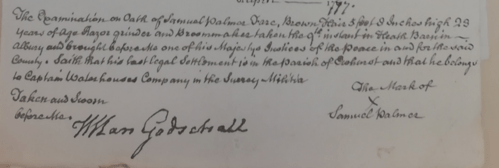
These two images of an examination and combined removal order (but they are often separate documents – see end of section for example) for Samuel Palmer, described as a rogue and vagabond who was found in Albury and who was to be punished in the house of correction for such offence. He was to be removed to Ewhurst and his examination includes includes a description of him:
“Fare, Brown Hair 5 feet 8 inches high 28 years of age Razor grinder and broommaker …saith that his last legal settlement is in the parish of Ewhurst and that he belongs to Captain Waterhouses Company in the Surrey Militia!”
Dated 1777, Surrey History Centre, P38/3/254
These records may include:
- Place of birth
- Age and parentage
- Employment and apprenticeship history
- Previous residences
- Marriage and children
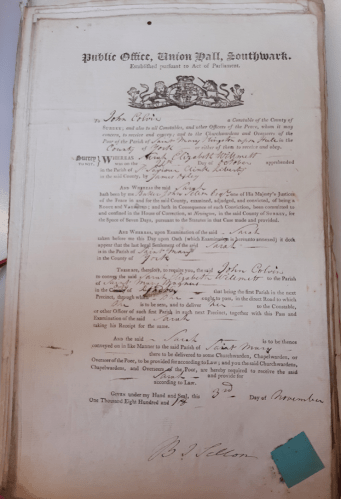
If a person was found not to belong to a parish, a Removal Order would be issued. The example below was found amongst Quarter Session records and details the removal of Sarah Willmott from St Saviours to Kingston Upon Hull in 1819.
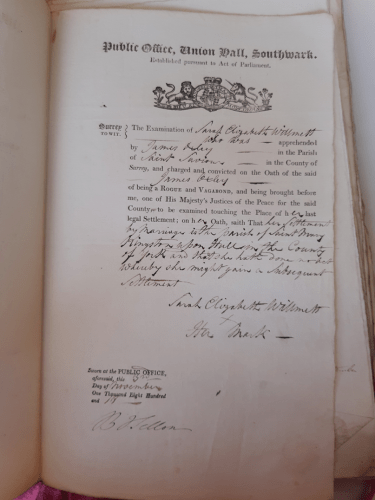
Surrey History Centre
Bastardy Records and Bonds
Bastardy records are some of the most revealing documents in parish collections. They were created to ensure that the financial responsibility for an illegitimate child did not fall on the parish.
These examinations can sometimes provide the only surviving evidence of a child’s father.
Once identified, the father could be required to support the child financially.
These may include:
- Maintenance payments
- Agreements between parents
- Incentives or pressure to marry
Final Thoughts
Settlement, removal, and bastardy records can provide a depth of detail rarely found in more familiar sources. They reveal movement, relationships, and the realities of daily life in a way that brings ancestors into much sharper focus.
If you’re researching in areas where parish records often survive well, these documents are well worth seeking out. With a bit of persistence—and a willingness to explore beyond the usual sources—you may uncover stories that would otherwise remain hidden.
 Sarah Pettyfer