This week has taken me in three different research directions: three projects; three separate families all with brick walls; and a coaching inn.
Project #1: Who Was My 3x Great Grandfather?
At the centre of this puzzle is a woman whose recorded identity shifts in ways that resist tidy explanation. Across three consecutive census returns, her status changes from single to married to widow — yet no husband appears in the household, and no marriage record has been located.
Her children complicate matters further. There are no birth registrations. No baptism records have surfaced. The children’s surnames vary in line with their mother’s changing identity. There marriage certificates vary in the name (where provided) of their father(s).
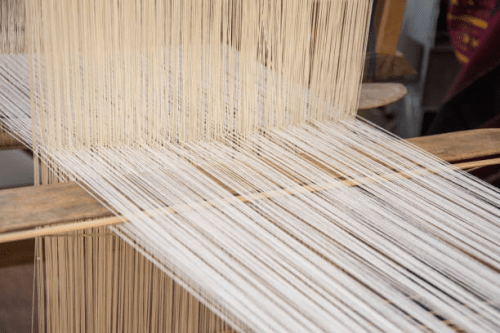
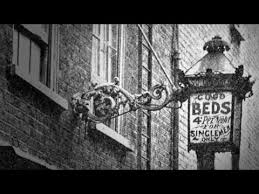
Her occupation shifts from silk weaver to lodging house keeper, suggesting economic adaptation, perhaps necessity.
The documentary trail hints strongly at illegitimacy, reinvention, and perhaps deliberate obfuscation. The absence of evidence here is not accidental — it is structural. The challenge is to determine whether the truth lies in parish records not yet indexed, in bastardy bonds, in settlement examinations, or in an entirely different surname.
For now, the wall stands — but it has cracks.
Project #2: Where Was My 3x Great-Grandfather From?
The second case rather than paternity.
Both lines of this family are firmly rooted in London and Surrey during the nineteenth century. Yet the surname itself points unmistakably to the west of England. The question is whether this ancestor can be connected back to those regional roots — or whether the similarity is coincidental.
Breaking through this wall requires moving beyond the direct line. Collateral research is essential: siblings, cousins, witnesses, neighbours. Naming patterns must be analysed. Migration trends considered. Occupational shifts examined within the context of the Industrial Revolution.
One unexpectedly valuable resource has been Find a Grave, particularly the transcription of a substantial family grave that helped reconstruct a wider kinship network. Such sources require verification, of course, but they can illuminate connections otherwise missed.
This is slower, broader work — less about a single missing record and more about reconstructing a community.
Project #3: The Castle Public House, Hickstead
Located in Hickstead, within the parish of Twineham, the property is best known locally as a former coaching stop on the old London–Brighton turnpike (now the A23). The hamlet today is associated with the All England Jumping Course, but historically it was a small settlement without shops — making the inn an important social and practical hub.

The building, most recently operating as a Chinese restaurant, dates architecturally to the eighteenth century, with a significant early nineteenth-century extension. It is listed by Historic England (List Entry Number: 1025583) as:
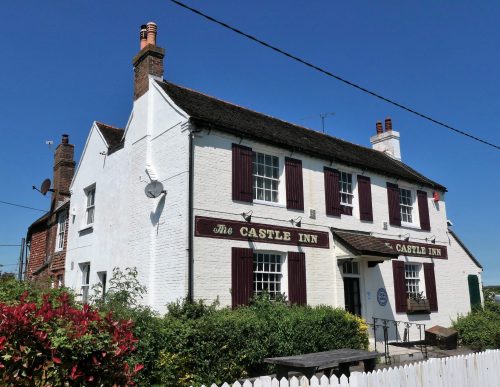
An L-shaped building. West wing C18. Two storeys. Four windows. Ground floor red brick and grey headers, above tile-bung. Tiled roof. Glazing bars intact. North wing early C19. Two parallel ranges. Two storeys. Three windows. Painted brick. Tiled roof. Windows with wooden shutters and glazing bars intact.
There are suggestions that the extension was built in 1817 by Daniel Dench. But who constructed the original property?
Some accounts claim the building was frequented by George IV during his journeys to Brighton, where he commissioned the Royal Pavilion. While colourful, such associations require cautious handling.
To investigate ownership, I turned to tithe records, land tax redemption records, and estate histories available through British History Online.
The land formed part of the Manor of Twineham, held by the Stapley family from 1542. The manor passed through successive generations — Anthony Stapley (d.1667), his son Anthony (d.1733), then to John and Richard Stapley — before transferring through marriage to the Wood family in the eighteenth century.
Land Tax Redemption records from 1798 show Westovers farm occupied by John Wood and owned by James Wood. The 1837 Tithe Apportionment confirms the existence of the Castle Inn, occupied by William Johnson, with John Wood Esq. as landowner. The entry refers to “Westovers & Castle Inn,” suggesting that the pub originated as the farmhouse of Westovers before evolving into a coaching inn.
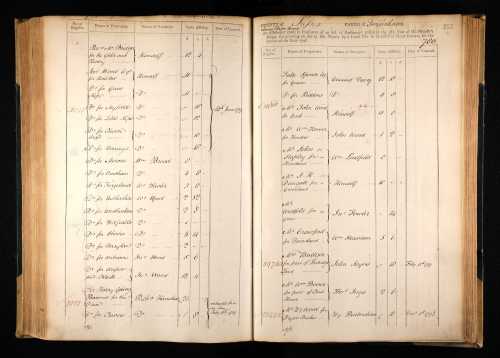
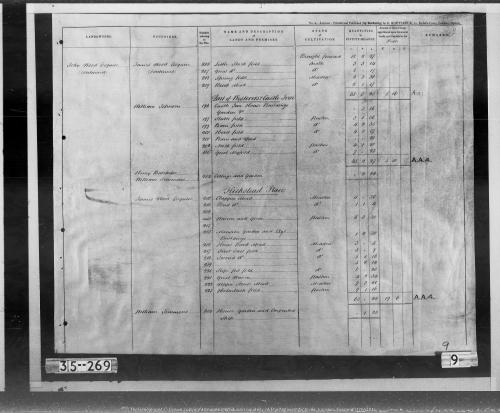
This does not conclusively identify the original builder. However, it firmly situates the property within the Stapley/Wood estate structure during the eighteenth century.
Further deeds and estate papers held at The Keep may yet provide definitive answers.
Each case this week has required a different methodology: forensic record analysis, collateral reconstruction, and property-based historical research. The common thread is patience. Brick walls are rarely impenetrable — but they demand time, context, and a willingness to look sideways rather than straight ahead.
I can’t wait to see what challenges next week’s research brings!
 Sarah Pettyfer